Why Your Post-Run Change Should Happen Before You Stretch

Quick Answer: Stretching takes 5 to 15 minutes, and that is exactly the window when your sweat-soaked layers do the most cooling. Changing into a dry top first — before you stretch — keeps your muscles warmer while you stretch, prevents the post-run chill, and cuts how long sweat sits against your skin. It costs 60 seconds and changes the whole recovery experience.
You finish the run, you feel good, and you go straight into your stretches. Ten minutes later you are cold, slightly stiff, and the shirt on your back has gone clammy.
The order is the problem, not the routine. Stretching is the longest stationary period of your entire workout, and it happens while you are at your wettest.
Here is what changing first actually does, and how to make it fast enough to be realistic.

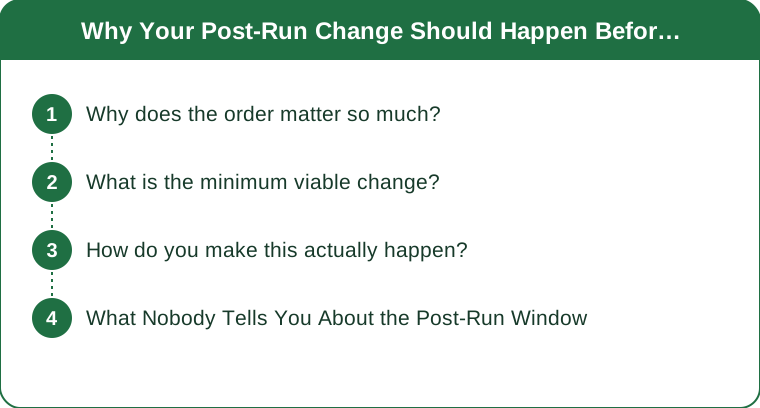
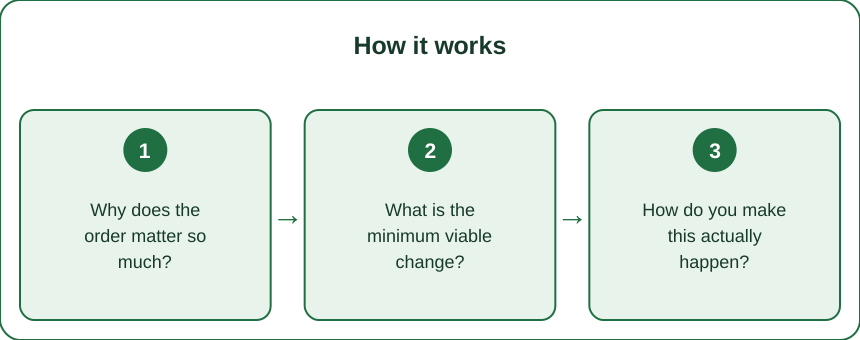
Why does the order matter so much?
Because stretching is the moment your heat production drops to nearly zero while your clothes are still fully wet.
You stop generating heat immediately. Running produces a lot of metabolic heat. The second you stop, that production falls off, but the evaporation from your soaked clothes continues at full rate — so the cooling suddenly overwhelms the warming.
Stretching is stationary and long. Ten minutes still, in wet fabric, with no muscular heat production, is the coldest configuration of your entire session. This is why the chill always seems to arrive during the cooldown rather than during the run.
Cold muscles stretch worse. The value of post-run mobility work comes partly from tissue being warm and compliant. Letting yourself cool for ten minutes first works directly against the point of doing it then.
Sweat contact time is the other cost. Prolonged wet fabric against skin is what drives most post-run skin irritation and chafing discomfort, and the stretching window is often the longest continuous stretch of it.
What is the minimum viable change?
Top and sports bra. Everything else can wait, and this takes under a minute.
The top is the priority. Your torso holds the most sweat and has the largest surface area for heat loss. A dry shirt over a wet bra is already a large improvement.
The bra is the close second. It is the wettest single garment on most runners, it sits against your chest and back, and it stays wet the longest because of its density. If you only change two things, change these two.
Socks and shoes come next, not first. Worth doing before a long stretch session in cool weather, but they are a distant third for comfort — despite feeling urgent.
Bottoms can genuinely wait. Leggings and shorts hold less water relative to their area and cover less of your core. Change them when you shower.

How do you make this actually happen?
Remove the friction. The reason people do not do this is logistics, not conviction.
Stage the dry layer before you leave. A dry shirt on the back of a chair by the door means changing is a 30-second decision, not a trip upstairs while you are sweaty and losing motivation.
Keep a dedicated post-run layer. One loose, absorbent top that lives with your running gear. Not your nicest shirt — one you never have to think about.
Bring it if you finish away from home. A dry top in a small bag at the car or the locker covers the drive or the walk, which is often the coldest part.
Do the same in summer. Warm weather makes the chill less obvious but the sweat-contact problem worse, because you sweat more. In August the reason to change first is skin comfort; in November it is temperature — either way, the order is the same.
What Nobody Tells You About the Post-Run Window
The first ten minutes decide how the next hour feels. People blame post-run fatigue and stiffness on the run itself when a good deal of it is a cold, damp cooldown. Changing first often removes the afternoon slump entirely.
A wet sports bra keeps you cold longer than anything else you own. Its density and coverage mean it holds water for a remarkably long time. Runners who change only their bra frequently report the biggest single improvement.
Post-run smell is mostly contact time. Bacteria act on sweat in the fabric over time. Getting the garment off sooner and rinsing or hanging it immediately does more than any detergent choice.
Stretching in a dry layer feels different enough to notice. Warmer tissue, no distraction from clamminess, and you stay long enough to actually finish the routine instead of cutting it short because you are cold.
This is the cheapest upgrade in running. No purchase required, 60 seconds of cost, and it changes the entire back half of every run you do.
TL;DR:
- Stretching is your longest stationary period and it happens while your clothes are at their wettest — that is when the chill arrives.
- Change your top and sports bra first, before you stretch. That is the whole intervention.
- Socks and shoes are a distant third; bottoms can wait until you shower.
- Stage a dedicated dry layer by the door or in your bag so changing costs 30 seconds instead of a decision.
- Do it in summer too — there the win is skin comfort and smell rather than temperature.
Almost every post-run comfort problem — the chill, the clamminess, the stiffness, the shortened stretch routine — traces back to the same ten minutes. Flip the order and you fix all of them at once.
See It in Motion
Keep Reading
This article is for general informational and styling purposes only. Fit, sizing, and product availability may vary.