Why Does an Evening Run Need a Different Change of Clothes Than a Morning One?

Quick Answer: After an evening run your body is already heading into its natural night-time temperature drop, so you cool faster and further than you do after a morning run. That means an evening change needs more insulation, sooner — a dry base layer within five minutes, a warm mid layer before you stop moving, and dry socks earlier than you think. The morning version of the same kit will leave you chilled by minute twenty.
You run the same loop at 7am and 7pm.
The morning version leaves you comfortable in a t-shirt for an hour afterward. The evening version has you hunting for a hoodie before you have finished your water.
Same run. Different body clock.
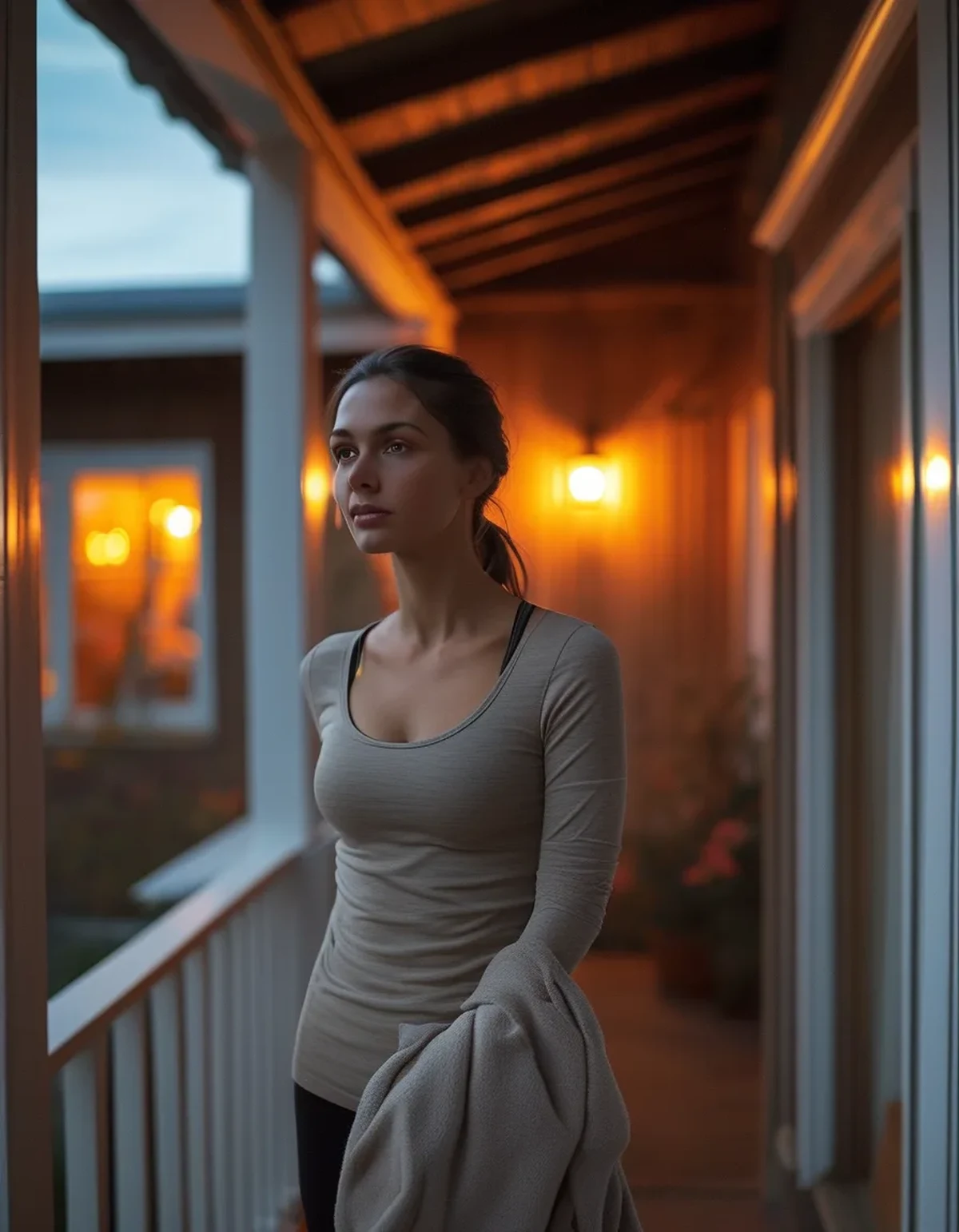
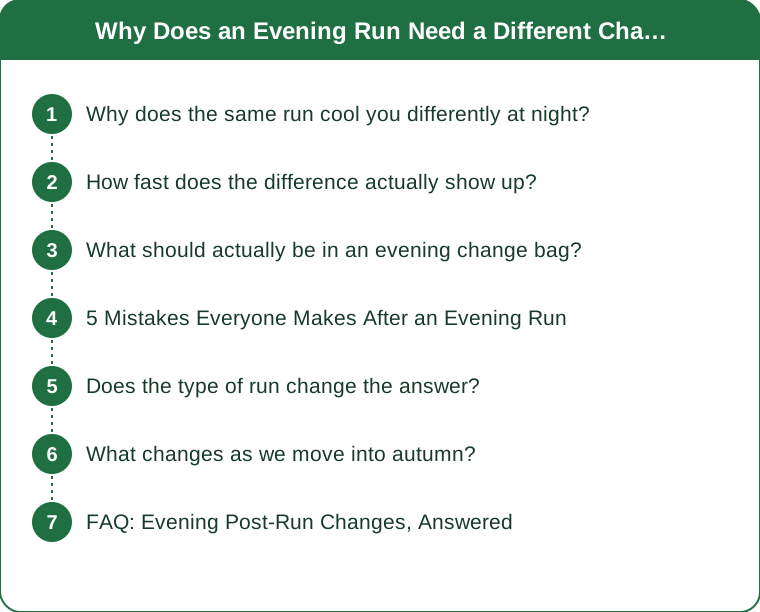
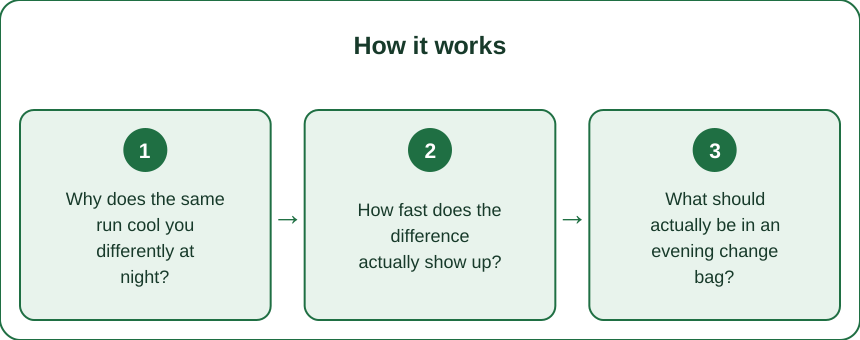
Why does the same run cool you differently at night?
Your core temperature is not a flat line across the day. It rises through the morning, peaks in the late afternoon or early evening, and then falls — and that fall is a big part of how you eventually fall asleep.
An evening run lands right at the top of that curve and then hands you over to the downslope. So you are not just cooling from exercise heat. You are cooling from exercise heat plus the drop your body was going to do anyway.
In the morning, the opposite is happening. Your body is on the way up. The exercise heat sheds, and then your natural rise catches you before you get uncomfortable.
That is why the same damp t-shirt feels fine at 7:40am and clammy at 7:40pm. The shirt did not change. The direction your temperature was already heading did.
How fast does the difference actually show up?
Faster than most people plan for. The gap usually becomes obvious somewhere between minute twelve and minute twenty after you stop.
That window is the same one where morning runners feel great and evening runners suddenly feel cold, which is exactly why people misjudge it. You feel fine while you are stretching, so you do not layer, and then the chill arrives once you are sitting down and no longer generating any heat at all.
A practical rule: on an evening run, put your dry layer on before you feel like you need it. If you wait for the signal, the signal arrives about eight minutes too late.
Add the outdoor temperature drop on top. Late August evenings in most of the country now fall three to six degrees in the half hour after sunset, and that half hour is often exactly when you are finishing.
What should actually be in an evening change bag?
The morning bag and the evening bag are not the same bag, even for the same route.
Evening bag:
- A dry base layer — long sleeve, not short. This is the single biggest upgrade.
- Dry socks. Feet lose heat fast and they are the first place an evening chill announces itself.
- A mid layer you can put on while still slightly warm, not after.
- Something for the back of the neck: a light scarf, a hood, a high collar. Heat leaves there quickly and it is the spot that makes you feel cold everywhere else.
Morning bag:
- A dry short-sleeve base is usually enough.
- Socks still matter, but you have more slack.
- A layer to carry, not necessarily to wear.
The difference is roughly one full layer plus a five-minute head start.
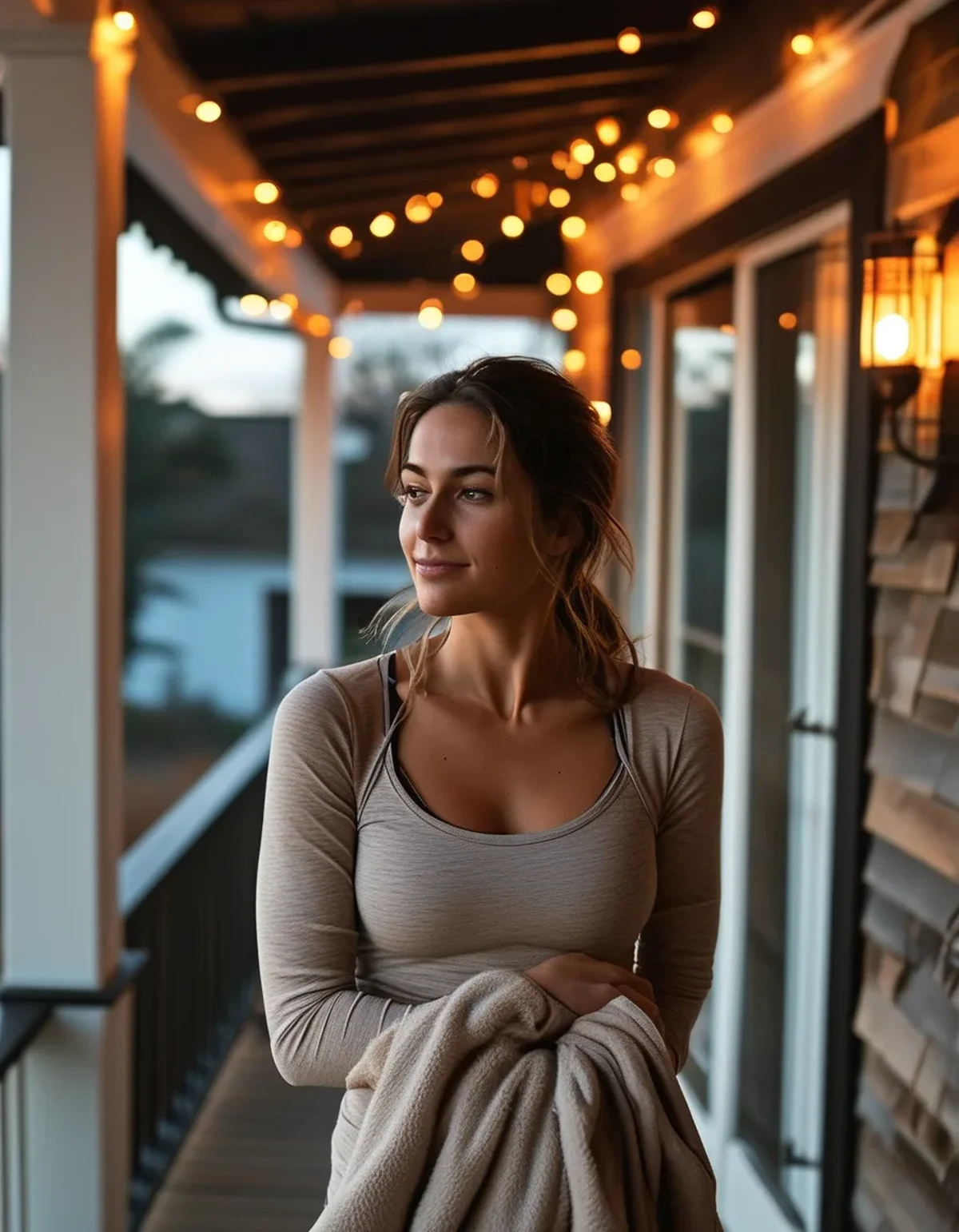
5 Mistakes Everyone Makes After an Evening Run
1. Stretching first, changing second. In the evening this is backwards. Stretching is ten to fifteen minutes of near-zero heat production in damp fabric, right at the start of your cooling window. Change first, then stretch warm.
2. Judging the layer by how you feel at minute two. At minute two you are still radiating heat from the run. Layer for minute fifteen.
3. Leaving the sports bra on wet. It sits against the largest part of your torso and holds moisture longer than almost anything else you are wearing. It is the highest-value single swap and the most commonly skipped.
4. Keeping the running shoes on for the drive or the walk home. Damp shoes plus stationary feet plus a cooling evening is the fastest route to feeling cold to the bone.
5. Treating a hot evening like a warm one. A 78-degree evening still has a falling curve underneath it. Humid summer evenings are the sneakiest, because you sweat more, dry slower, and assume the heat will protect you.
Does the type of run change the answer?
It does, and in a way that runs counter to instinct.
A hard evening session actually gives you a slightly longer grace period, because you built up more heat to shed. An easy evening jog gives you less — you produced modest heat, you are still damp, and the night drop takes over sooner.
So the easy run is often the one that leaves you shivering, which is why people describe the confusing experience of feeling colder after their gentlest workout of the week.
Interval sessions are their own case. The stop-start pattern means you have already been through several partial cooling cycles, and your body is less efficient at heat retention by the end. Treat an evening interval session as the coldest of the three and layer accordingly.
Long slow runs after dark deserve the full treatment: dry everything, plus the neck.
What changes as we move into autumn?
The window shrinks. Through late summer you have maybe fifteen to twenty minutes of grace. By late September that is closer to eight, and by mid-October it can be almost immediate.
What also changes is where the cold hits first. In summer it is the torso, because that is where you are wettest. In autumn it moves to the extremities — hands and feet — because the air itself is now colder than your skin rather than close to it.
So the autumn upgrade is not a heavier coat. It is gloves and dry socks in the bag long before you think a coat is necessary.
One more seasonal shift: darkness arrives while you are still finishing. Anything you put on after an evening run from mid-September should have something reflective on it, because your change of clothes is now also your visibility.
FAQ: Evening Post-Run Changes, Answered
Can I just shower instead of changing?
If the shower is within five minutes, yes — that solves it entirely. The problem is the gap. Most people are twenty to forty minutes from a shower after an evening run, and that gap is precisely the cooling window.
Does a hot drink help or make it worse?
It helps, mildly, and mostly through comfort rather than physiology. It is not a substitute for a dry layer, but the combination works well. A cold drink right after an evening run genuinely does accelerate the chill.
Will layering up too early keep me sweating?
Slightly, and that is the tradeoff. The fix is a dry base layer underneath, so any new sweat has somewhere to go. Layering over a wet shirt is what causes the clammy feeling people blame on layering itself.
Does this affect sleep?
It can, in both directions. Getting properly warm before bed supports the natural drop that follows. Getting chilled and staying chilled tends to delay it.
TL;DR:
- Evening runs land at the top of your daily temperature curve, so you cool faster and further afterward than you do in the morning.
- The chill usually arrives twelve to twenty minutes after you stop, which is later than the moment most people decide whether to layer.
- Change first, stretch second — reverse the usual order.
- An evening bag needs one more layer than a morning bag, plus dry socks and something for the back of the neck.
- Easy evening runs leave you colder than hard ones, and autumn shrinks the whole window to under ten minutes.
The fix is small and it is mostly about sequence rather than gear. Put the dry layer on before you believe you need it, deal with socks and shoes earlier than feels reasonable, and let stretching happen once you are already warm and dry. Do that and an evening run stops being the one that leaves you cold on your own doorstep.
Keep Reading
This article is for general informational and styling purposes only. Fit, sizing, and product availability may vary.