Why What You Wear on the Run Decides How Fast You Can Change After It

Quick Answer: Wet fabric grips skin, and the tighter and longer the garment, the more surface area is gripping. A full-length compression legging over damp skin can take three to four times longer to remove than a loose short, and a sweat-soaked long-sleeve is genuinely hard to get over your head alone. If you know you are changing after — for work, for coffee, for the school run — choose shorter, looser, and front-opening, and the change goes from six minutes of struggle to under two.
The run outfit is not just a run decision. It is a decision about the fifteen minutes after the run.
And it is the one people plan least.
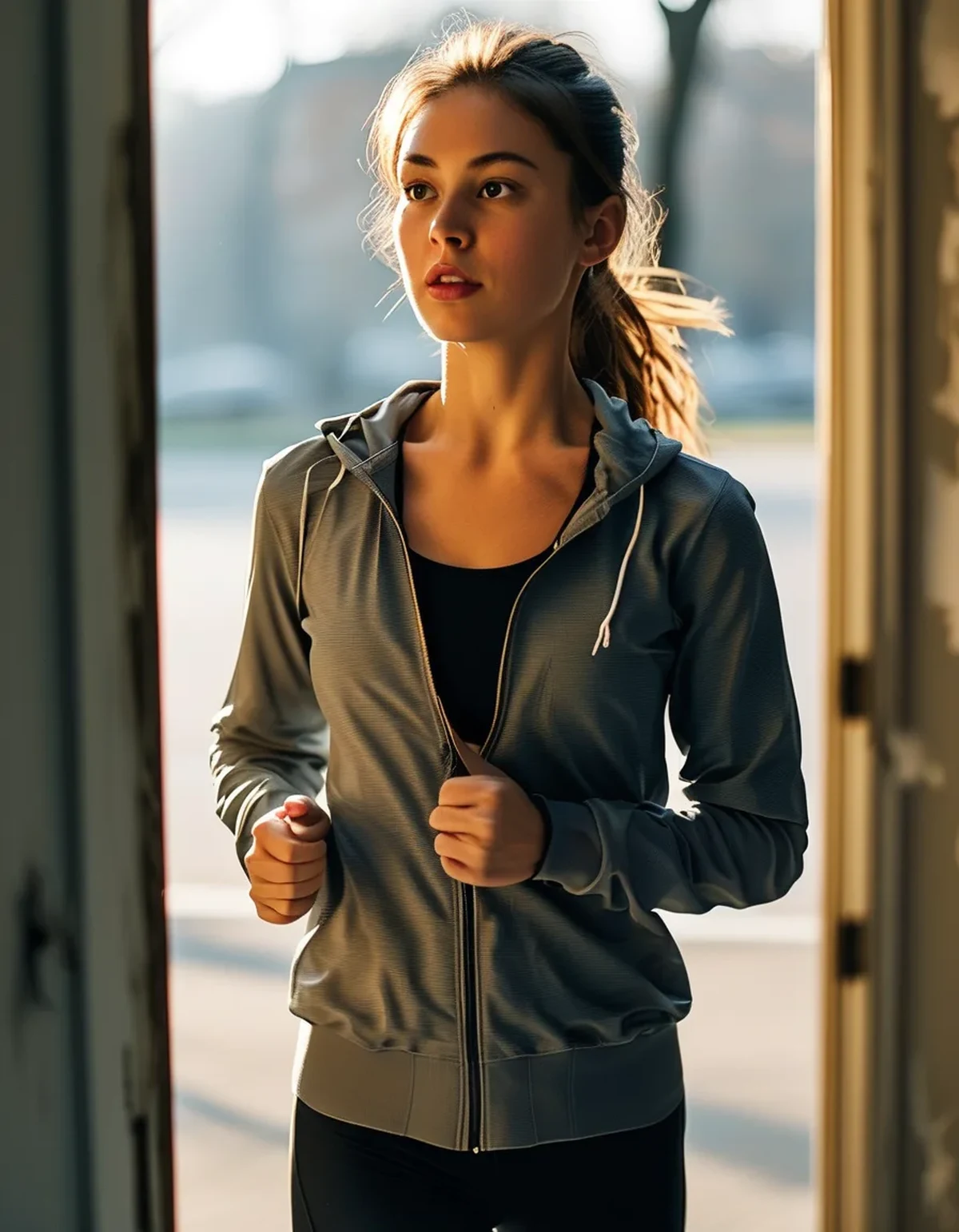
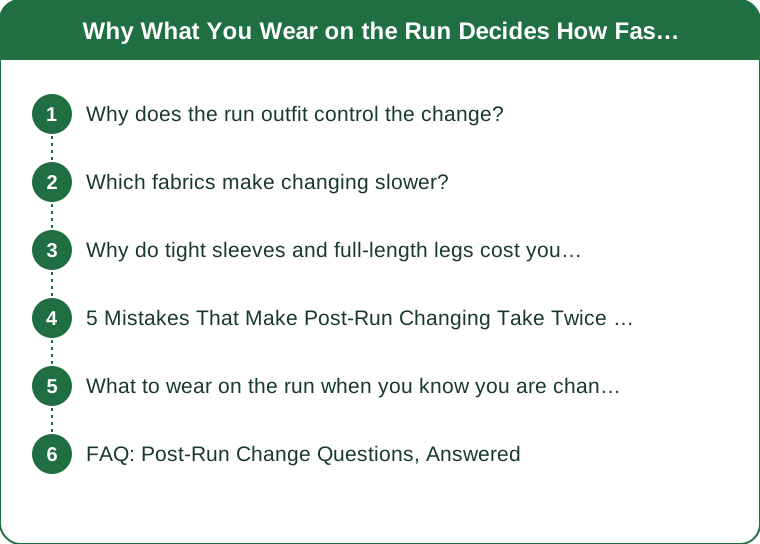
Why does the run outfit control the change?
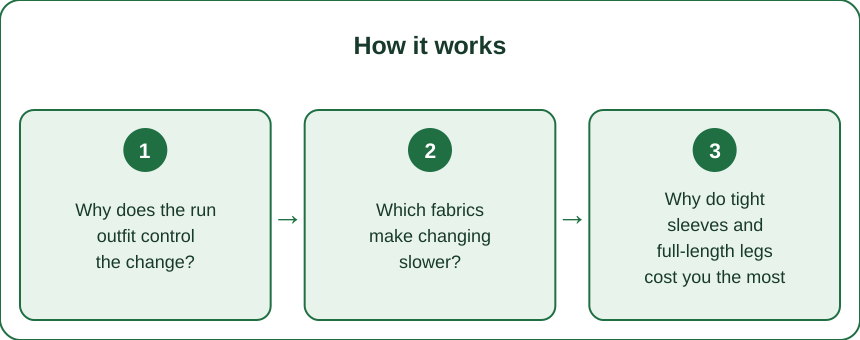
Because removing damp technical fabric is a friction problem, not a fit problem.
Dry synthetic fabric slides over skin easily. Wet synthetic fabric does not — the water forms a thin film that creates surface adhesion, and the fabric essentially suctions to you. That is why a legging that goes on in ten seconds can take two minutes to peel off after a hard hour.
The amount of trouble scales with contact area and compression. A high-compression full-length legging has enormous contact area and is actively pressing into the skin. A loose short has a fraction of both. The difference is not marginal.
Add a sports bra — the single hardest item to remove when damp, because it is tight, it goes over your head or shoulders, and your arms are already tired — and you have the full explanation for why a post-run change reliably takes longer than anyone budgets for.
Which fabrics make changing slower?
In rough order from worst to best when wet:
- Cotton blends. Hold the most water, get heavy, cling hardest, and stay wet longest. Nothing about cotton helps here
- High-compression synthetics. Excellent while running, genuinely difficult to remove damp
- Standard poly or nylon knits. Manageable, and dry fast enough that the last ten minutes of a cooldown walk help
- Merino blends. Cling less than you would expect and feel less clammy, though they dry slowly
- Loose woven shorts. Barely a factor. They come off in one motion regardless of how wet they are
The practical reading of that list: if a quick change matters, the item to change is the legging, not the top. Legs have the most contact area and the least leverage — you are bending over, tired, usually standing on one foot in a small space.
Why do tight sleeves and full-length legs cost you the most minutes?
Because they turn a pull into a peel.
A loose sleeve comes off as one movement. A damp fitted sleeve has to be worked down the arm in stages, and every stage is fabric releasing from skin. The same is true of a full-length legging: you cannot pull it off in one go, so you roll it down in sections, and each section fights you.
There is also a leverage problem. To remove a damp full-length legging you generally need to be sitting, or balancing on one leg, and you are doing it with legs that just ran. This is the reason people end up sitting on changing room floors.
Capri or 7/8 lengths are the meaningful compromise — you lose very little on the run and you cut the peeling distance by a third. Loose-fit shorts are faster again, if the weather and your preference allow.
The top matters far less than people assume, as long as it is not a tight long-sleeve going over your head.
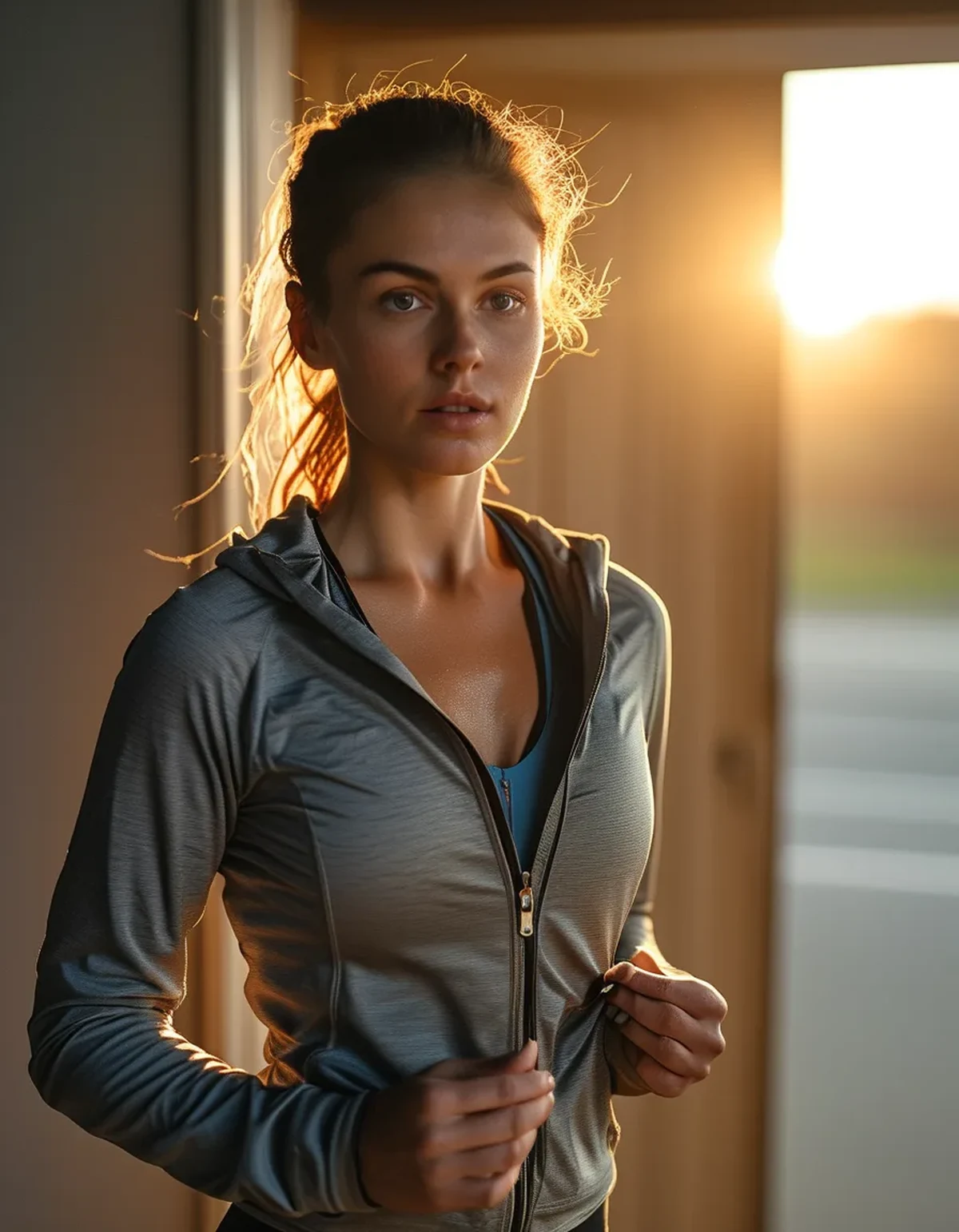
5 Mistakes That Make Post-Run Changing Take Twice as Long
1. Packing the change of clothes at the bottom of the bag. You will be standing there wet, hunting. Pack in reverse order of use.
2. Bringing a change of top but not a change of sports bra. The bra is the wettest item you own and the one that keeps you cold. It is also the one people forget.
3. Starting the change immediately. Give it two or three minutes of standing or walking first. You stop actively sweating and the fabric loses its worst clamminess, and the whole change gets easier.
4. Choosing full-length compression on a day with a hard stop afterwards. The kit was right for the run and wrong for the schedule.
5. Skipping dry socks. They take ten seconds and they change how the entire rest of the day feels. The third mistake is the one that surprises people — waiting makes it faster, not slower.
What to wear on the run when you know you are changing after
Build the kit backwards from the change.
The fast-change kit:
- Loose short or 7/8 legging rather than full-length compression
- A front-opening layer if you need a layer at all — a zip beats a pullover every time
- A sports bra you can undo, ideally with a clasp rather than a step-into design
- Low-cut socks you can peel without sitting down
Pack, in this order from the top of the bag: a small towel, dry underwear and bra, dry top, dry bottoms, socks, then a bag for the wet kit.
The wet-kit bag matters more than it sounds. Without one, the damp pile goes in with the dry clothes and you spend the rest of the day with a slightly damp jumper, wondering why you are cold.
And if the run is genuinely a means to an end — commuting, fitting it around a meeting — a loose short and a light tee will cost you almost nothing in performance and save you five minutes on the other side.
FAQ: Post-Run Change Questions, Answered
Does a quick rinse make changing easier or harder?
Easier, if you can dry properly afterwards. Rinsing removes the salt that makes damp fabric feel gritty and sticky. Rinsing and then pulling clothes onto wet skin is worse than not rinsing at all.
What about wipes instead of a shower?
They work well for the top half. Use them after you are out of the wet kit, not before — the point is to dry and cool the skin so dry clothes slide on.
How long should I wait before changing?
About three to five minutes for an easy run, longer after a hard effort. You want your core temperature to start dropping so you are not sweating into fresh clothes. In cool weather, put a dry layer over the top while you wait, then do the full change.
TL;DR:
- Damp technical fabric grips skin, so tighter and longer means slower to remove
- Leggings, not tops, are the bottleneck in almost every post-run change
- Waiting three to five minutes before changing makes the whole thing faster
- Pack in reverse order of use, and always bring a dry sports bra
If your post-run changes always seem to run long, the fix is upstream of the change. Pick the kit with the next fifteen minutes in mind, and the part of the day you dread quietly stops being a problem.
See It in Motion
Seen here: High Waist Yoga Leggings with Side Pockets — shop it on bubblelime.com
Keep Reading
This article is for general informational and styling purposes only. Fit, sizing, and product availability may vary.