Why Your Post-Run Change Shifts With the First Cool Mornings

Quick Answer: In summer you change to stop overheating; in early fall you change to stop cooling too fast. Your body is still shedding heat at summer rates when the air has dropped ten degrees, so the same damp top that felt refreshing in July starts pulling heat out of you within minutes. Layer within five minutes, prioritize the torso, and change socks sooner than you think.
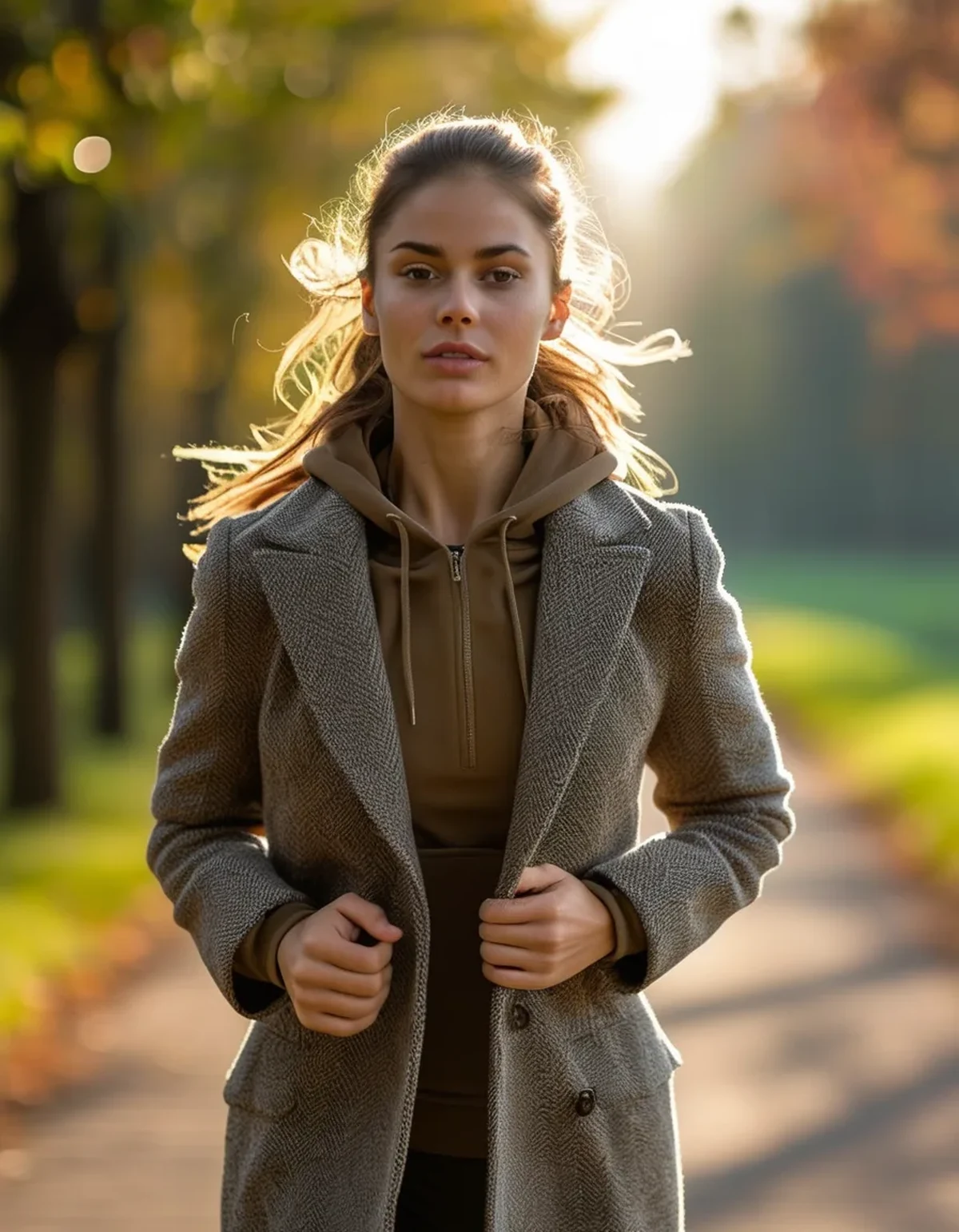
The first genuinely cool morning of the season always catches people out. Same route, same pace, same clothes — and you arrive home shivering in a way that did not happen last week.
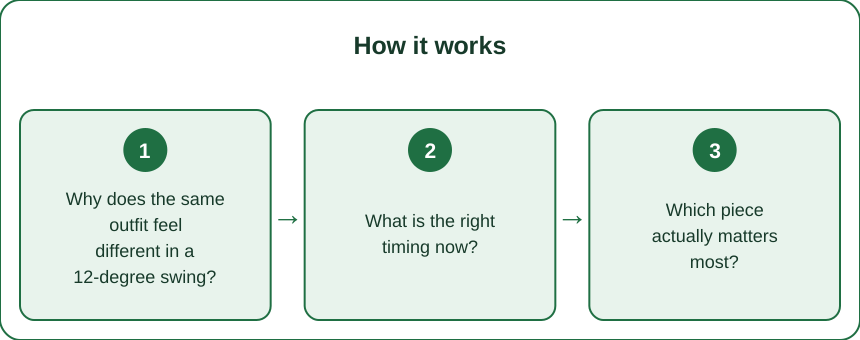
Why does the same outfit feel different in a 12-degree swing?
Because your heat production has not changed, but your heat loss has.
During a run your body ramps up sweat production and dilates skin blood vessels to dump heat. When you stop, that heat-dumping machinery stays switched on for roughly ten to twenty minutes while your core temperature comes back down. In July, ambient air is warm and that process feels pleasant. In September, you are actively dumping heat into air that is fifteen degrees cooler than it was a month ago.
The damp layer makes it much faster. Evaporation from wet fabric against skin is an extremely efficient cooling mechanism — that is the whole point of sweat — and it does not politely stop when you have cooled enough.
Add even a light breeze and the effective rate roughly doubles. This is why the specific combination that gets people is: cool morning, damp shirt, standing still to stretch outside. All three at once.
What is the right timing now?
Sooner than in summer, and in a different order.
The summer sequence most people use is: finish, walk, stretch, change eventually. That works when the air is doing nothing to you.
The early-fall sequence:
- Within 2 minutes: get a dry or windproof layer over your torso, even if you feel warm. Feeling warm is the last moment before you do not.
- Within 5 minutes: change the base layer against your skin if you can. This is the single highest-value swap.
- Within 10 minutes: dry socks and shoes off. Feet cool fast and stay cold for ages once they get there.
- Then stretch, ideally somewhere sheltered.
The change that trips people up most is the last one. Stretching outside in a damp top on a 55-degree morning is fifteen minutes of standing still while wet, which is close to the worst-case setup for getting properly chilled.
Which piece actually matters most?
The one touching your torso. Everything else is secondary.
Your core is where the thermoregulatory stakes are, and it is also where the most sweat-soaked fabric sits. A dry base layer under the same jacket you were already wearing outperforms an extra jacket over a wet base layer, and it is not close.
Ranked by how much difference each swap makes on a cool morning:
- Base layer against the torso — largest effect by far
- Socks — second, and underrated. Wet socks in cooling air are why your feet are still cold an hour later
- A windproof outer layer — large if there is any breeze, minimal if the air is still
- Bottoms — smallest. Legs have a better ratio of muscle mass to surface area and are producing residual heat for longer
- Hat or headband — small but disproportionate to its weight. Easy to carry, useful on the cold end
If you can only carry one spare item in a small pack, it is a dry base layer. If you can carry two, add socks.

Myth vs Fact: The Post-Run Cool-Down
Myth: You should cool down completely before changing. Fact: Backwards on a cool morning. Change while you are still warm, so your body finishes cooling in dry clothes at its own rate rather than being cooled by evaporation.
Myth: Getting chilled after a run makes you sick. Fact: Cold air does not cause infection. What is genuinely true is that being chilled is uncomfortable, makes stretching less effective because muscles cool quickly, and tends to shorten the post-run routine you actually wanted to do.
Myth: Merino solves it. Fact: Merino does retain more warmth when damp than cotton does, which is a real advantage. But wet is still wet — a dry synthetic beats a damp merino every time.
Myth: A jacket over everything is enough. Fact: A shell traps the moisture against you. Without a dry layer underneath you have made a small humid environment that cools you steadily. The layer order matters more than the layer count.
What should be in the bag from now until spring?
A compact, boring kit that lives in your car or by the door and never gets unpacked:
- One dry base layer — long sleeve, synthetic or merino, thin
- One pair of dry socks
- A packable windproof layer that stuffs to the size of an apple
- A thin beanie or headband from about October
- A small towel for the back of the neck and hair, since wet hair against your neck is a surprisingly effective cooling system
The seasonal habit worth building now, while the mornings are only mildly cool: put the layer on before you think you need it. The window between comfortable and chilled is short, and it closes faster as the season goes on. By November it is about four minutes.
If you drive to your runs, keep the whole kit in the car permanently. The kit you have to remember is the kit you forget on exactly the morning it turns.
FAQ: Cool-Weather Post-Run Questions, Answered
How cool does it have to be before this matters?
Most people notice the shift somewhere around the mid-50s Fahrenheit, and considerably higher if it is windy or you are damp. Wind is the bigger variable — a breezy 60 can chill you faster than a still 50.
I finish at home. Do I still need to change fast?
If you go straight inside, less so, though air conditioning creates the same problem indoors. The habit is worth keeping either way, because the exception is always the day you stop to talk to a neighbor.
Should I still take a cold shower after?
That is a personal preference and there is no strong evidence either way for recovery. Just note that on a cool morning you are starting from a lower baseline than you were in July, so the same shower is a bigger stimulus than it used to be.
TL;DR:
- Your body keeps dumping heat for 10 to 20 minutes after you stop, and cooler air makes that a problem
- Change the torso base layer within five minutes — it matters more than any other swap
- Socks come second; stretch after you have changed, ideally indoors
- Keep a permanent kit of dry base layer, socks, packable windproof, and a small towel
The transition weeks are the ones that catch everyone, because the run feels like summer and the fifteen minutes afterward do not. Move the change earlier in your routine now and you will not have to think about it again until spring.
Keep Reading
This article is for general informational and styling purposes only. Fit, sizing, and product availability may vary.