Why Post-Run Outfit Smell Lingers in Some Fabrics Way Longer Than Others

Quick Answer: Synthetic fabrics like polyester have a molecular structure that lets sweat-borne bacteria bind more tightly to the fiber itself than to natural fibers like cotton or merino wool, which is why polyester-heavy workout and post-run pieces are frequently the worst offenders for lingering odor even after normal washing — choosing merino wool or specifically treated anti-odor synthetic blends, and washing with a sport-specific detergent, both directly address this fiber-level cause rather than just masking the smell temporarily.
A post-run outfit that keeps smelling no matter how it’s washed usually has a fiber-level explanation, not a laundry routine failure.

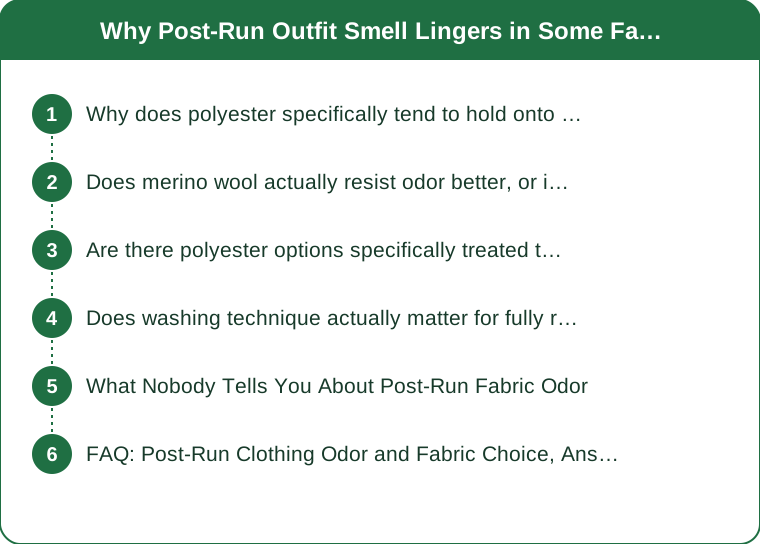
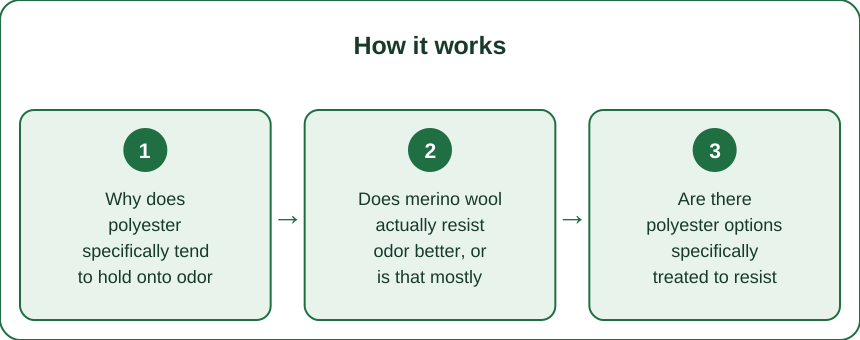
Why does polyester specifically tend to hold onto odor more than other common fabrics?
Polyester’s fiber structure has a more oil-attracting (oleophilic) surface than natural fibers, and sweat contains oils and organic compounds that odor-causing bacteria feed on — these compounds and the bacteria that produce odor bind more tightly to polyester’s fiber structure, making them measurably harder to fully remove with a standard wash cycle compared to fibers that don’t attract and hold onto these compounds as strongly.
Does merino wool actually resist odor better, or is that mostly marketing?
It’s genuinely well-supported — merino wool has natural antimicrobial properties and a fiber structure that absorbs moisture into the fiber core rather than holding it on the surface, which limits the surface-level bacterial growth that produces most workout-related odor. This is a real, physiologically grounded difference, not just a marketing claim, though merino pieces are often pricier and less common than polyester for running-specific gear.
Are there polyester options specifically treated to resist this odor-binding tendency?
Yes — many brands offer polyester blends with added antimicrobial silver-ion or specific anti-odor fiber treatments, which directly target the bacterial binding and growth that causes the smell, providing a meaningful improvement over untreated polyester while retaining polyester’s moisture-wicking and durability advantages. Checking for this specific treatment claim on the label is worth doing for anyone prioritizing odor resistance in synthetic pieces specifically.

Does washing technique actually matter for fully removing this bound-in odor from polyester?
Yes, significantly — standard detergent alone often doesn’t fully break the bond between odor-causing residue and polyester fiber, but a sport-specific detergent designed to target this exact issue, along with washing in cooler water and avoiding fabric softener (which can coat and trap odor further), meaningfully improves how completely the odor is actually removed rather than just masked by fresh detergent scent.
What Nobody Tells You About Post-Run Fabric Odor
Letting sweaty post-run clothes sit balled up in a gym bag for even a few hours before washing significantly worsens the odor-binding process, since the bacteria causing the smell continue actively multiplying in that warm, damp, low-airflow environment — getting clothes out to air dry or into the wash promptly, rather than leaving them bagged, is a simple habit that measurably reduces how deeply the odor sets in regardless of fabric type.
FAQ: Post-Run Clothing Odor and Fabric Choice, Answered
Is cotton actually a good choice for avoiding this specific odor problem, even though it’s not ideal for moisture-wicking during a run?
Cotton does resist the fiber-binding odor issue better than untreated polyester, but its poor moisture-wicking during the actual run is a real tradeoff, making it a better choice for post-run change-into pieces than for the run itself.
How often should heavily worn synthetic pieces be replaced if odor persists despite proper washing?
If odor persists consistently despite sport-specific detergent and prompt washing, the fiber may have accumulated enough bound-in residue over time that replacement becomes the more practical solution.
Does soaking smelly synthetic clothes in vinegar or baking soda before washing actually help?
Both are commonly recommended pre-treatment steps that can help break down some of the bound bacterial residue, providing a modest improvement particularly for stubborn, established odor.
TL;DR:
- Polyester’s fiber structure binds sweat-borne bacteria and oils more tightly than many natural fibers
- Merino wool has genuine natural antimicrobial properties that limit surface bacterial growth
- Antimicrobial-treated polyester blends meaningfully improve odor resistance over untreated synthetic fabric
- Prompt washing with sport-specific detergent, rather than letting clothes sit bagged, prevents deeper odor binding
Lingering post-run outfit smell traces to a real fiber-level cause, and choosing the right fabric plus a few washing adjustments addresses it far more effectively than any amount of extra detergent alone.
Keep Reading
This article is for general informational and styling purposes only. Fit, sizing, and product availability may vary.