Why What You Change Into After a Run Actually Affects How Fast Your Body Cools Down

Quick Answer: Cotton and other absorbent, non-breathable fabrics trap sweat and moisture against the skin after a run, which slows evaporative cooling and can leave you feeling clammy and overheated for longer, while moisture-wicking or breathable fabrics let sweat evaporate efficiently and help your core temperature drop back to normal faster — the fabric you change into post-run is a real, measurable factor in cooldown comfort, not just a style preference.
The instinct to grab something soft and cozy right after a run often works against the actual cooling process your body is trying to complete.
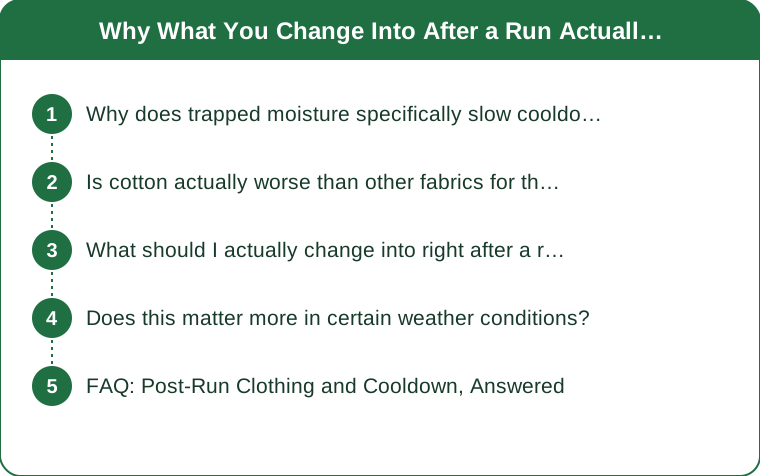
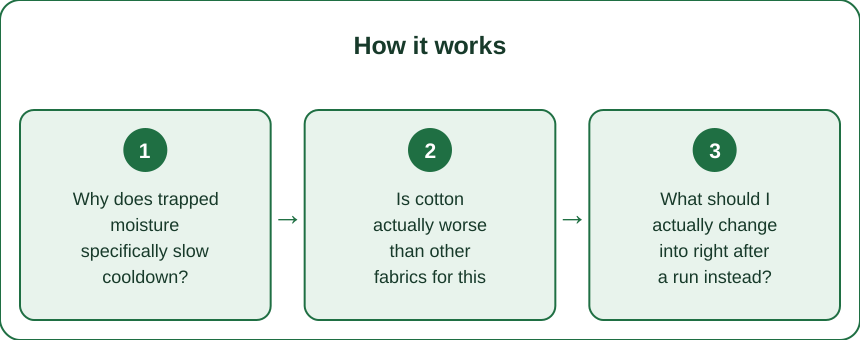
Why does trapped moisture specifically slow cooldown?
Evaporative cooling — sweat evaporating off the skin — is one of the body’s primary post-exercise cooling mechanisms, and fabric that holds moisture against the skin instead of letting it evaporate freely interferes with this process, keeping you feeling warmer and damper for longer than a breathable fabric would.
Is cotton actually worse than other fabrics for this specifically?
Yes — cotton absorbs and holds moisture rather than wicking it away, which is comfortable once you’re fully dry and settled, but works against the immediate post-run cooling window when your body is actively trying to release heat and moisture.
What should I actually change into right after a run instead?
A moisture-wicking base layer, even a simple technical tee, changed into promptly after finishing, lets sweat continue evaporating efficiently, supporting faster cooldown before switching to comfort-focused cotton or looser layers once you’re actually cooled down.
Does this matter more in certain weather conditions?
Warm, humid conditions make this effect more noticeable, since the body relies more heavily on evaporative cooling when it’s already working harder to dissipate heat, while cooler, drier conditions make fabric choice somewhat less critical for cooldown speed specifically.
FAQ: Post-Run Clothing and Cooldown, Answered
How soon after a run should I actually change clothes?
Changing out of sweat-soaked gear within 15-20 minutes of finishing is a reasonable general guideline, both for cooldown comfort and to reduce skin irritation from prolonged damp fabric contact.
Is it fine to wear cotton later, once I’ve fully cooled down?
Yes — cotton’s moisture-retention downside specifically matters during the active cooldown window; once your body has returned to baseline temperature, fabric choice matters far less.
Does this affect how quickly heart rate returns to normal, not just temperature?
The two are related but distinct — fabric choice mainly affects perceived temperature and comfort, while heart rate recovery depends more on overall fitness and cooldown activity like walking.
TL;DR:
- Evaporative cooling is a key post-exercise mechanism that moisture-trapping fabric interferes with
- Cotton absorbs and holds sweat rather than wicking it away efficiently
- A moisture-wicking layer changed into promptly supports faster, more comfortable cooldown
- This effect is more pronounced in warm, humid conditions than cool, dry ones
Keep Reading
This article is for general informational and styling purposes only. Fit, sizing, and product availability may vary.